The Tree Method to Work Out Compound Interest
We've talked a lot about compound interest and how you can be using it to bolster your investments. I find it more fascinating than I should really, given that it's maths and I'm not a maths girly, but it's so useful in a finance context but also so wildly un-getable for humans that I can't help but be drawn to it.
Compound Interest - A Wildly Exciting, Unbelieveable Fact!
When I was a kid there were loads of books full of random, very exciting, absolutely unbelieveable facts (!!!!!) that every 7/8/9/10/11 year old should know. (Do they still have those? Totally out of touch with kids - see this previous blog post...). One of the regular facts was that if you were able to fold a piece of paper 42 times then it would theoretically be thick enough to reach the moon. That's the power of compounding.
Anyway. When I'm working out compounding, which is not that often, I use this calculator and it does all the work for me. I've also been known to do some actual maths (the formula is this: A = P(1 + r/n)^(nt)). For our purposes you don’t need to know this formula - I certainly don’t remember it - but that’s what’s happening in the background.
Instead of dealing with formulas though, I came across this different method of working out the maths, but really it's a visual explanation of how compound interest actually works which helped my brain understand it - and maybe yours?
So please forgive me another mathsy post, but first:
What Is Compound Interest?
Compound interest means earning interest on your interest.
So in one period your money earns some interest, in the next period the interest is worked out on the original money and the previous interest, in the next period it's worked out on the initial money, the first period's interest and the second period's interest and so on.
The Tree Method - Visualising Compound Interest
So. In our compound interest example, we have £10,000 earning 10% interest over four periods:
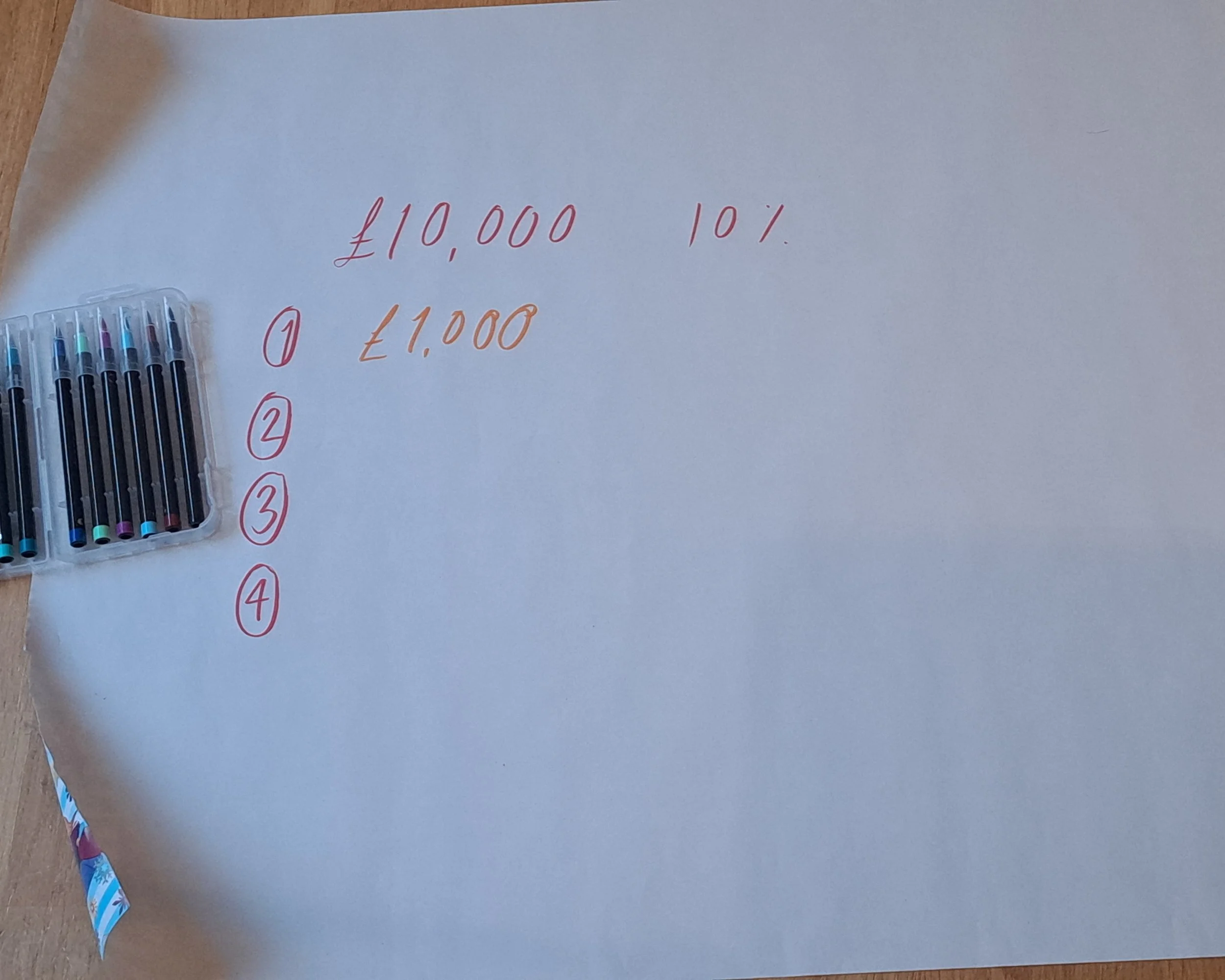
After the first period, you've earned a simple £1,000.
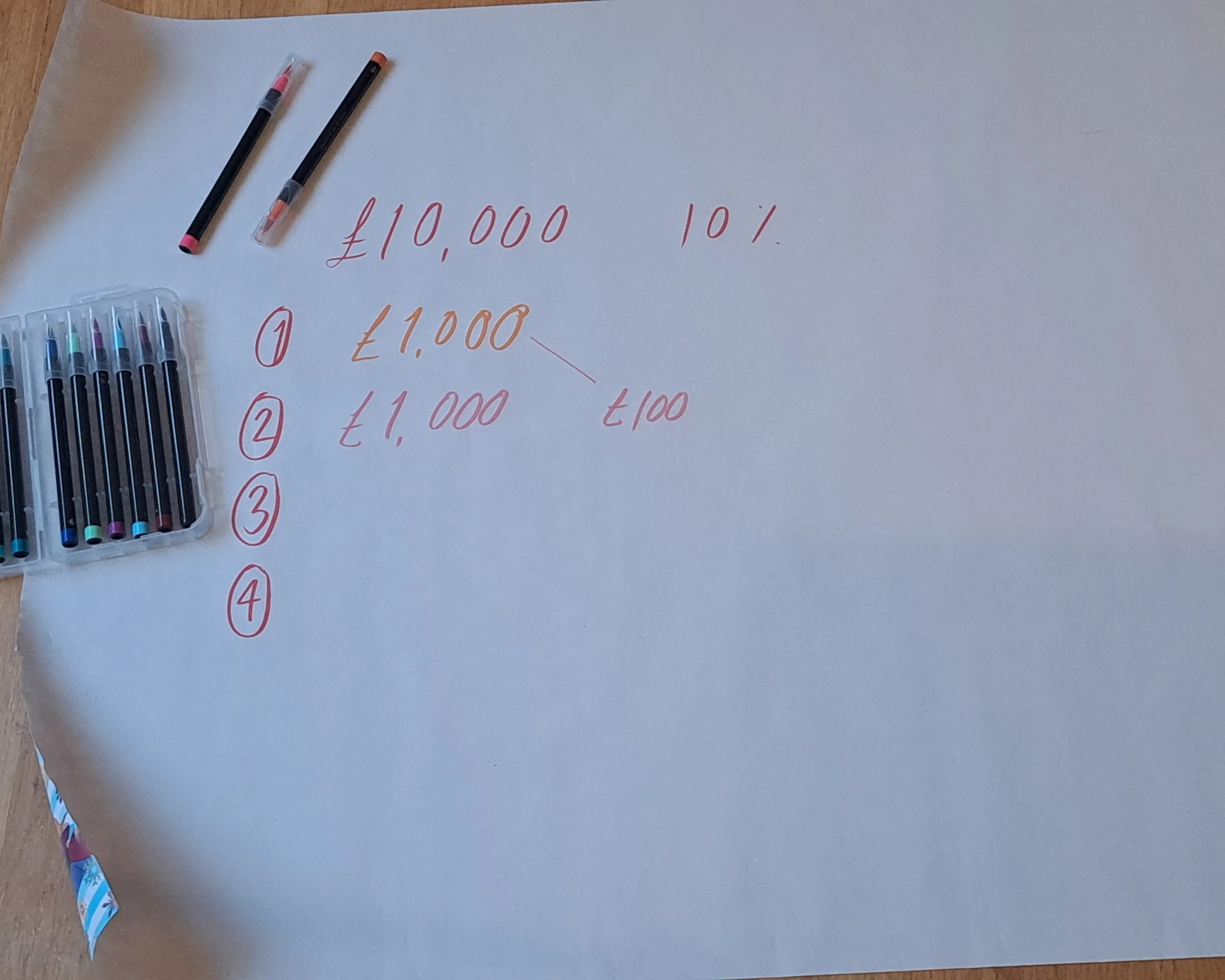
After this second period, you get your £1,000 again but you also get:
10% on the first period's interest, so £100.
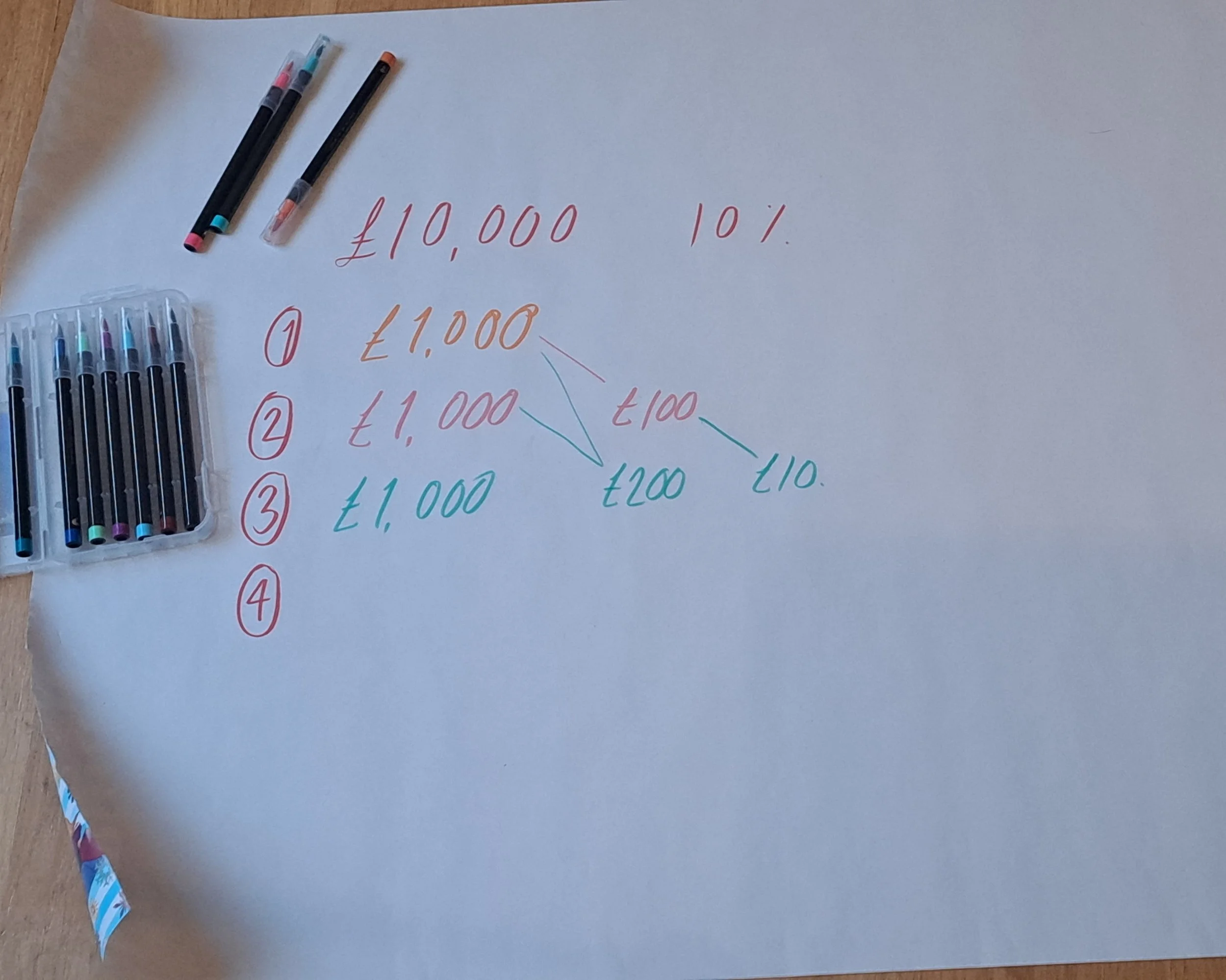
After this third period, you get your £1,000:
10% on the first and second period's £1,000's so £200,
and 10% on the second period's £100, so £10.
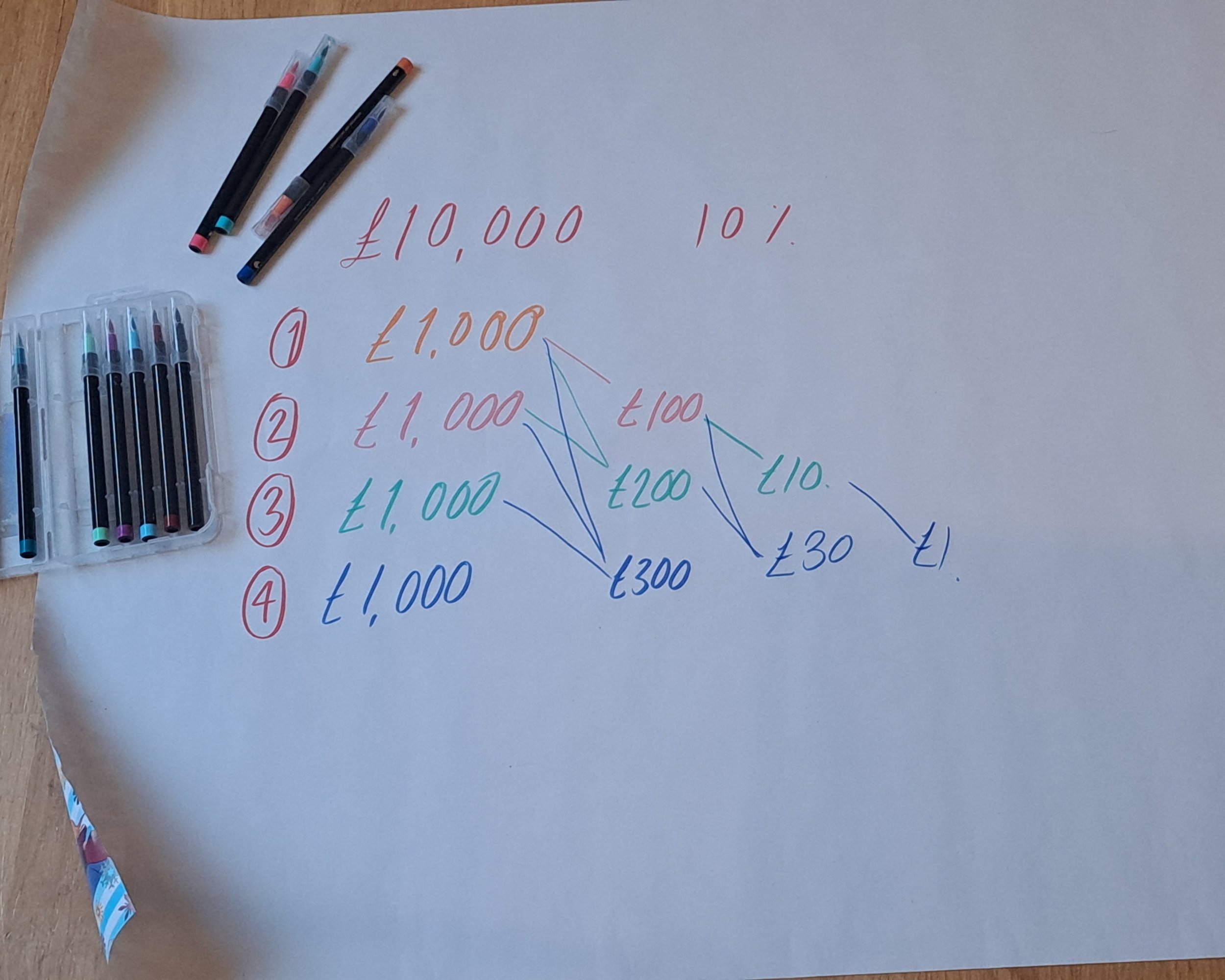
After this fourth period you get your £1,000,
10% on the first, second and third period's £1,000's so £300,
10% on the second and third period's £100 and £200 so £30,
and 10% on the third period's £10 so £1.
This can go on forever and ever but if we leave it here, add all those figures up, the grand total is:
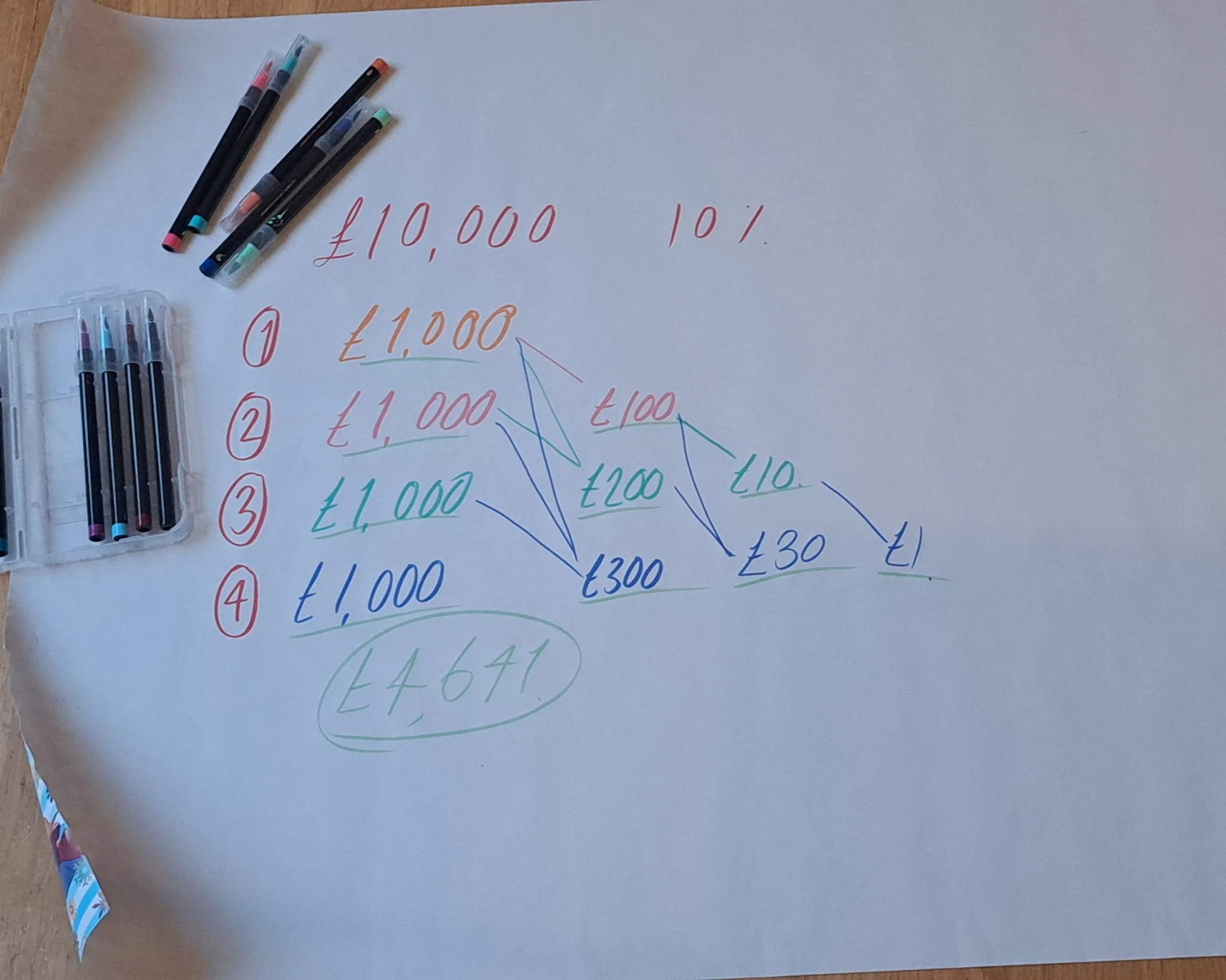
£4,641.
(Of course you still have your initial £10,000 too).
The interest is earning interest is earning interest is earning interest. It’s called the tree method because each line branches out from the last line.
Why Leaving Your Money Alone Matters
The way to utilise this is to whack your money in savings - or ideally investments - and simply leave it there. If you take it out, you lose the power of compounding.
Next week we talk about how you get to a stage where you don't need to take that money out with emergency funds and a broke amount.
This week's newsletter is also inspired by trees but in a totally different way - sign up here!
Love Eleanor. xxx
